“Diego?” he asked, barely moving his lips.
I didn’t answer. I didn’t need to.
The final agreement was better than I had imagined: I kept the apartment in Lavapiés, received reasonable financial compensation, and—most importantly—a document in which Javier renounced any future claims. His firm didn’t fire him, but the Barcelona project went to another architect, and his name stopped coming up in important meetings.
The last time I saw him was when we signed the papers before a notary in an old building on Alcalá Street. He seemed about to say something, but swallowed the words. He signed. I signed too. The notary looked up, recited the formal phrases, and with that, the “joke of a marriage” officially ended.
Outside, Diego was waiting for me, leaning against a streetlamp with a takeaway coffee in each hand.
“So… what now?” he asked, handing me one.
I looked at the traffic, the people crossing the street, the overcast Madrid sky. Javier still existed—with his wounded ego and his career on pause. The world hadn’t collapsed. But he no longer had power over mine.
“Now there are no bets,” I said. “Only decisions.”
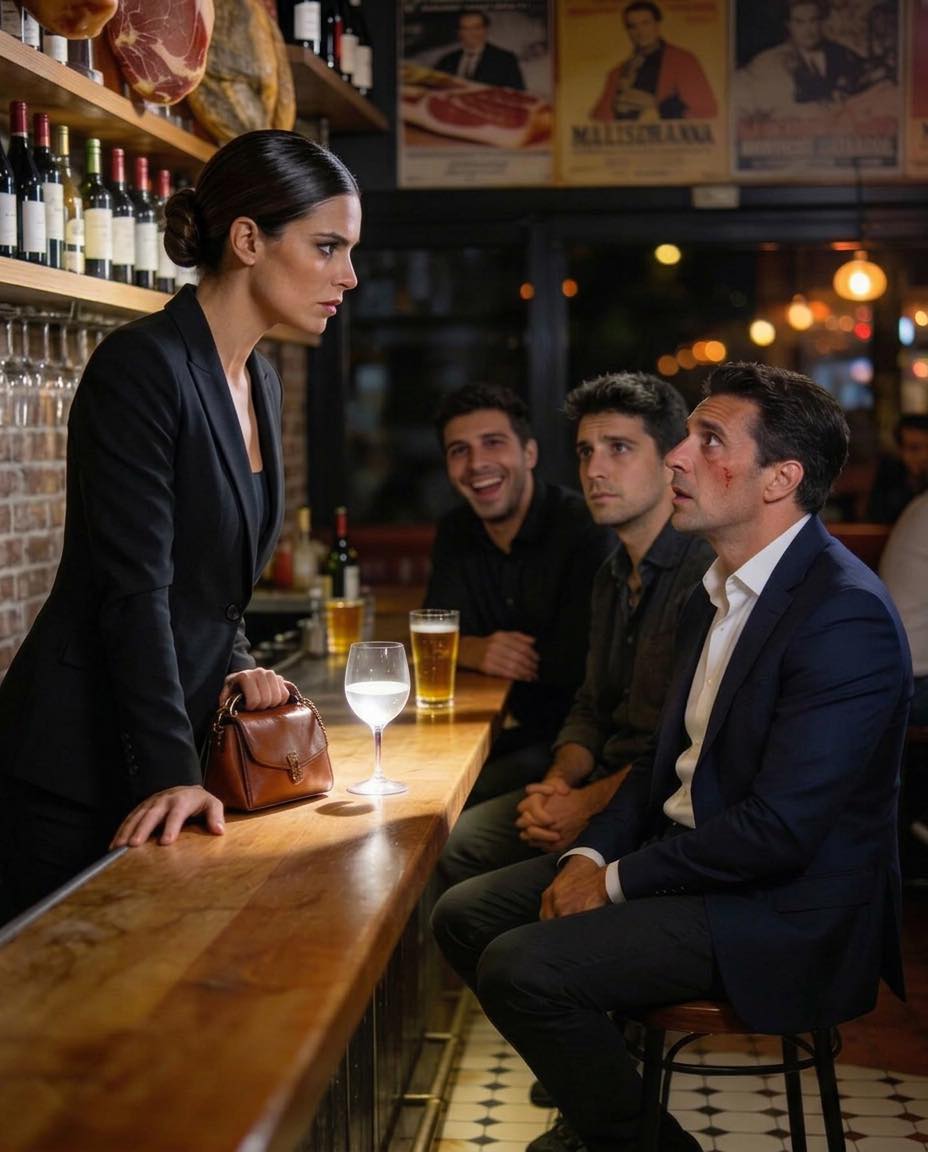
Diego smiled, for the first time without guilt in his eyes. We walked down Alcalá without touching, like two people who knew the future wasn’t written—but at least it was no longer a joke told in a bar full of other people’s laughter.
And for the first time in a long time, when I thought about my life, I didn’t feel shame or fear. Only a clear silence—like a blank page waiting to be written by me, and by no one else.