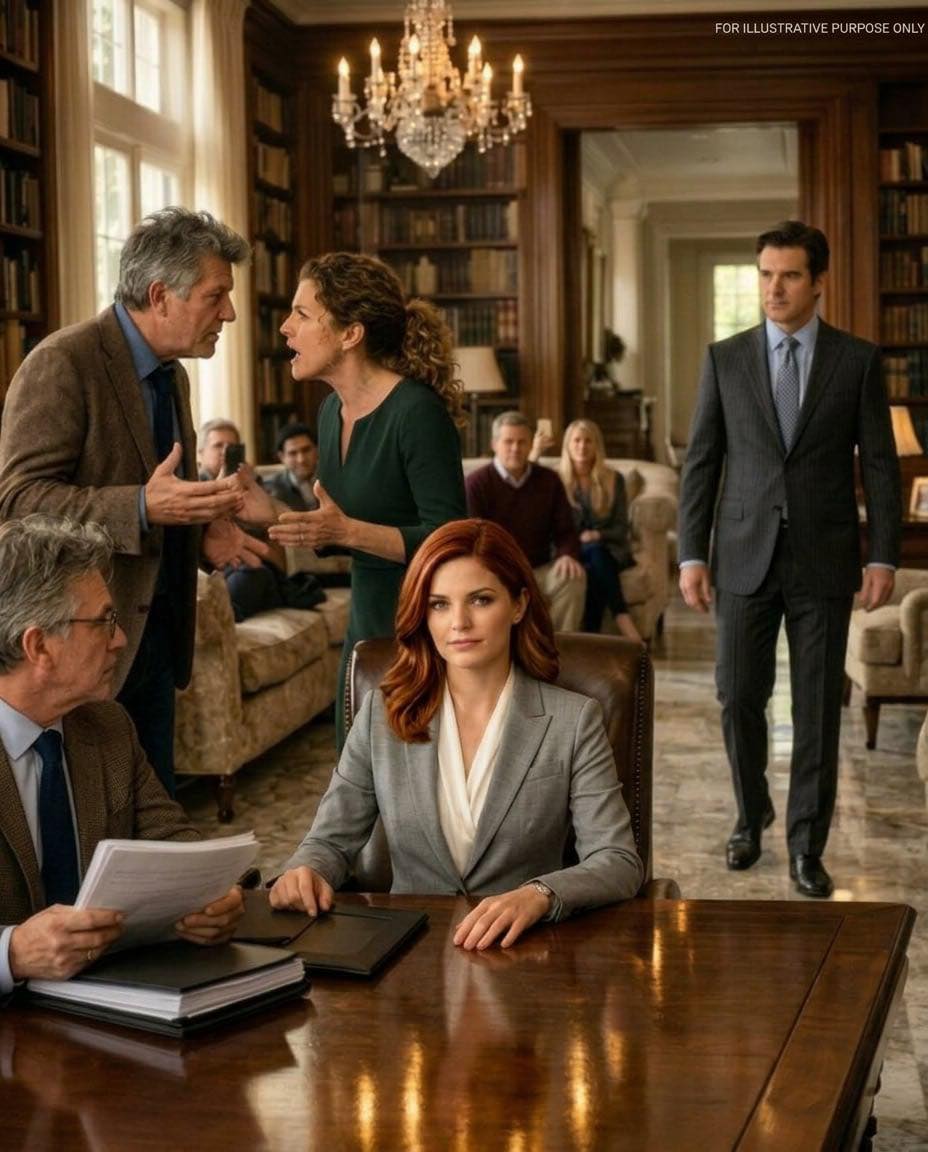
My father leaned back like he enjoyed arguments. “Of course. We never signed her away. She ran off.”
My mother jumped in with a trembling voice. “We were overwhelmed. Lena was difficult. We thought time with Evelyn would help, but we never meant—”
My lawyer slid the first document across the table.
“Termination of parental rights,” he read calmly. “Filed twelve years ago. Signed by a judge.”
He turned it toward them.
Their names were on it.
Darren Cole.
Tracy Cole.
My father’s smugness vanished so fast it looked like someone had switched off a light.
“What is this?” he snapped.
“The order that would’ve been served,” my lawyer replied, “if you hadn’t moved without leaving a forwarding address.”
My mother made a small, strangled sound.
Then came the next paper—child support.
“You were ordered to pay,” my lawyer said. “You never did.”
My father tried to protest, tried to claim ignorance, tried to reach for outrage like it could change ink on paper.
But the room wasn’t built for excuses. It was built for facts.
The estate attorney added softly, “Ms. Hart disclosed all of this during her estate planning. She was… meticulous.”
Meticulous wasn’t even the word.
Evelyn hadn’t just written a will.
She’d built a fortress.
My lawyer kept going—another set of documents, then another. Two prior lawsuits my parents had tried to file against Evelyn, both dismissed. One sanctioned. One abandoned when they couldn’t pay legal fees.
When my father threatened to sue again, my lawyer didn’t flinch.
“You’ve already tried,” he said. “Twice.”
My parents looked like the air had been drained from them.
Then the estate attorney unfolded a handwritten letter from Evelyn—one meant to be read only if my parents showed up and made a claim.
And it cut clean through the room.
She named what they’d done. She named what she’d done for me. She made it clear I owed them nothing—no money, no forgiveness, no access. She wrote that they could leave with only one inheritance:
the consequences of their choices.
When it ended, silence hit like a door slamming.
My father stood too quickly, chair scraping. He tried to bluster, to threaten, to turn toward me.
“Careful,” my lawyer said mildly. “Threats in front of attorneys and an audio recorder tend to upset judges.”
My father’s mouth snapped shut.
My lawyer’s voice stayed calm. “This room was never yours. The courtesy of being heard has been extended. You’ve been heard. You’ve been declined.”