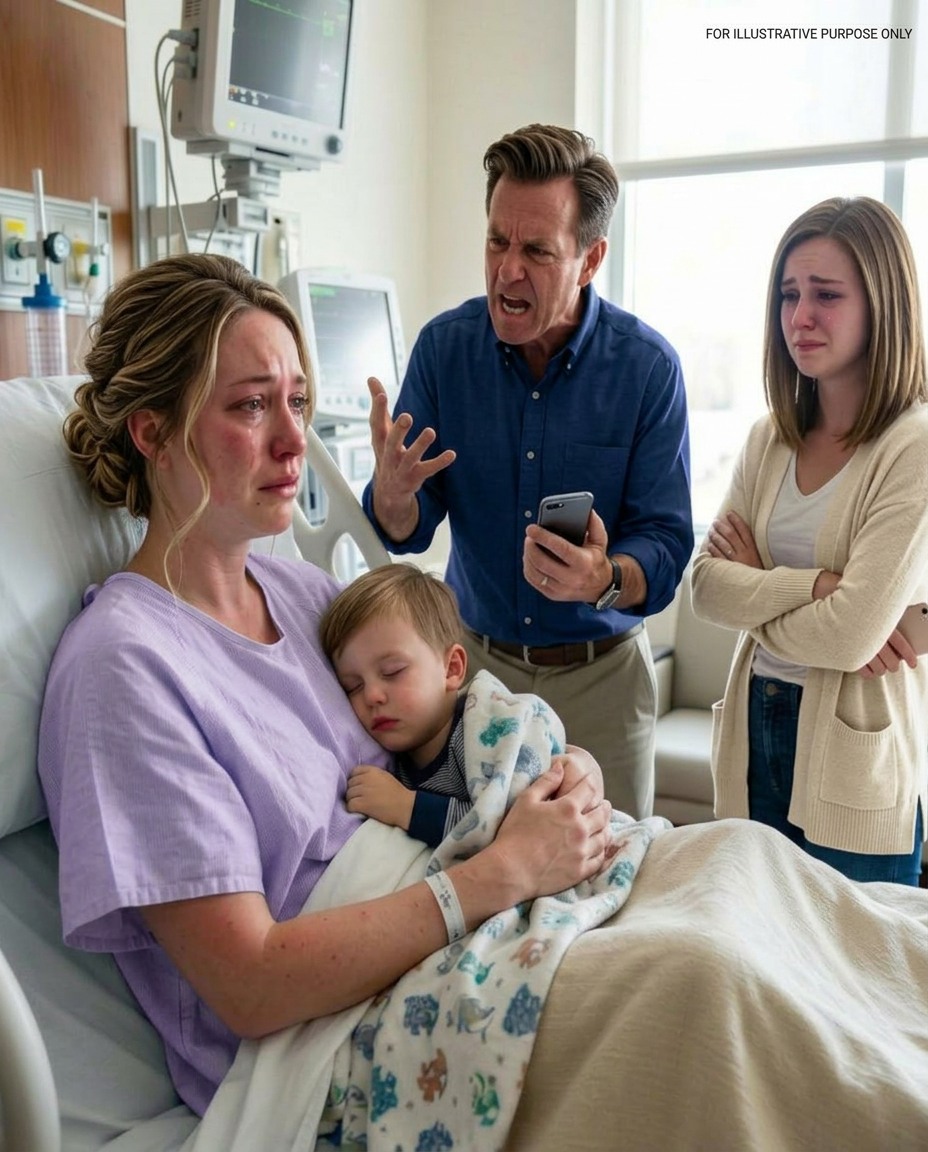
Not her father, Thomas Pierce, who never missed a chance to talk about the importance of family at church.
Not her older sister, Megan, who filled social media with quotes about loyalty and grace. Not her younger brother, Cole, who could respond instantly to fantasy football messages but somehow had nothing to say when his sister and nephew were lying in a hospital. Lauren checked the group chat over and over again. At four in the morning—nothing. At seven twenty—still nothing.
By noon, the message sat there unanswered between an old recipe discussion and a holiday photo Megan had shared days earlier. When Lauren’s friend Tessa arrived with fresh clothes and a phone charger, she asked the question Lauren already dreaded: “Who’s called?” Lauren let out a brittle laugh. “You already know.” Then Tessa showed her Megan’s public post from that same morning. It was a cheerful family lunch photo: Megan, their father, Cole, his wife, and two cousins smiling around a farmhouse table at their aunt’s house. The caption read: Sunday lunch with the people who matter most. Family is everything. Lauren stared at the words until they blurred. No mention of the crash. No check-in. No concern for Oliver. She locked the screen and set the phone down because she knew her anger was too dangerous to carry while her child slept beside her and her own body was still injured.
Three days later, after they were discharged and back in her small townhouse in Carmel, Lauren woke from medicated sleep to the sound of her phone rattling across the coffee table. There were forty-eight missed calls—all from her father—and one short message telling her to answer immediately. She stared at it, then called back. When Thomas answered, he didn’t ask if she or Oliver were okay. He didn’t ask how they were recovering. He sounded irritated.
The first thing he said was, “Finally. What were you thinking?” Lauren thought for a moment the medication must have distorted his words. But no—he was angry. Angry that she had sent what he called a dramatic message to the family group without enough context. Angry because Megan was hosting relatives and church guests that day, and Lauren’s text had caused people to ask questions. Lauren sat there in disbelief as he explained that Megan hadn’t wanted the lunch gathering ruined. That was his explanation. Not that they had been worried. Not that they didn’t know how serious it was. Just that her accident had been inconvenient.
As the conversation went on, the truth got uglier. Megan had seen the message right away and ignored it because, in her words, Lauren always made things too intense. Cole had muted the group chat. Their father had agreed they would deal with it later, after lunch, after company, after appearances. Then later became tomorrow, and tomorrow became the next day, until someone outside the immediate family found out the crash had really happened and contacted Thomas in shock.
That was when the missed calls started. Not because he was worried. Because he had been exposed. Lauren listened to every word until the illusion she had carried for years finally fell apart. Her family didn’t fail her by accident. They made a choice. They protected appearances instead of people. When her father told her to stop making the situation public before others got the wrong impression, Lauren finally answered with the truth: the right impression was that her son had been hospitalized and none of them cared enough to send a single text back.
After the call ended, she sat there shaking—not from the accident this time, but from the realization of what had always been true. Tessa found her crying so hard she could barely breathe and said the one thing Lauren needed to hear: You are allowed to stop asking for love where there isn’t any. That night, Lauren blocked Megan. Then Cole. Then her father. She sent one final email making her boundary clear: until further notice, she and Oliver would have no contact with the family.
No visits, no surprise drop-ins, no messages passed through relatives or church members. If there was a genuine emergency, it could go through her attorney. The backlash came quickly. Cousins called her dramatic. An aunt wrote that family deserved grace. Megan posted vague lines online about betrayal. None of it changed the simple truth: when Lauren and Oliver were hurt, afraid, and alone, the family that preached closeness chose optics over love. Once she saw that clearly, she couldn’t pretend otherwise anymore.