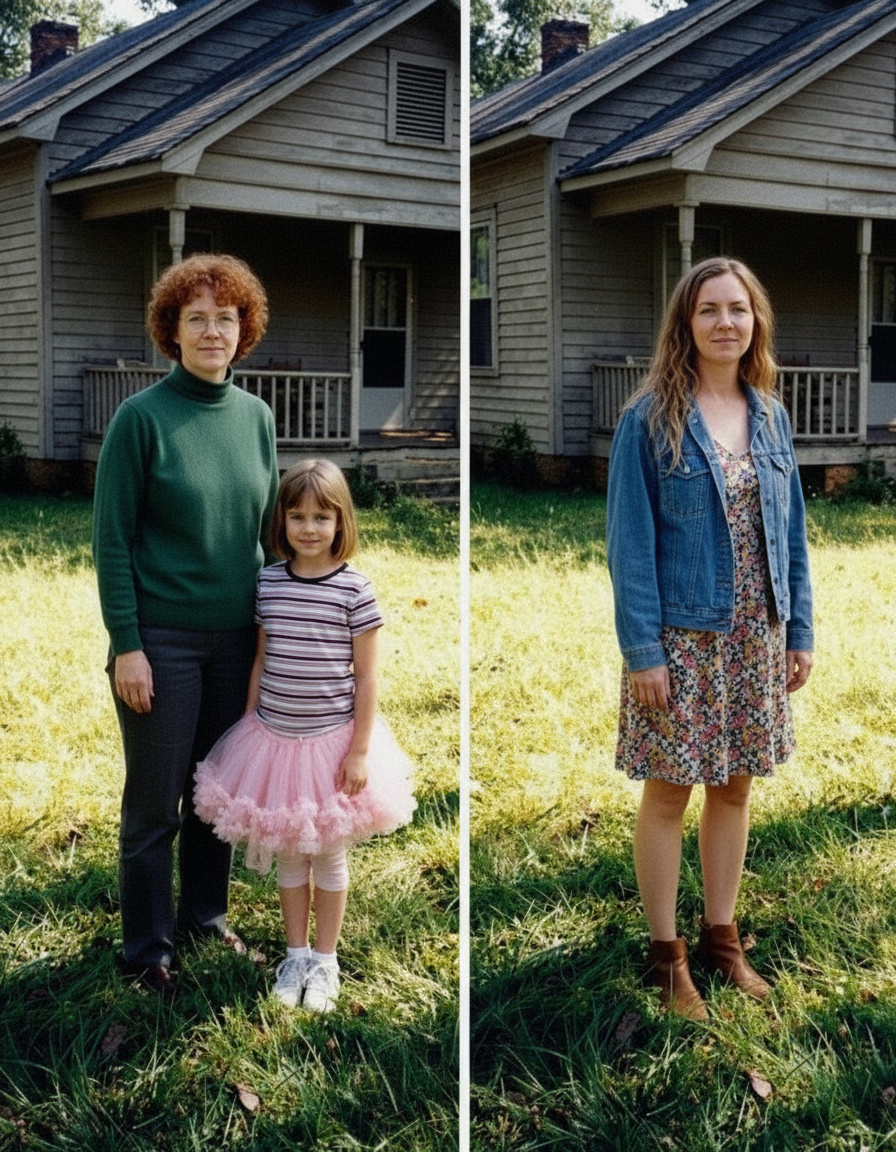
Once I finished school, I moved to another city for work. I created my own life. I worked at a marketing agency, rented a modest apartment, and spent weekends with friends who felt more like family than anyone else ever had.
I called her occasionally and visited when I could.
“How are you feeling?” I’d ask over the phone.
“I’m fine.”
“How’s the house?”
“It’s the same.”
Our conversations were always brief. She rarely asked about my world. Eventually, I stopped expecting more.
Maybe that was simply who she was. Maybe some mothers express love quietly.
The phone call came on a Thursday evening. I remember because I had just walked in from work.
“Is this Margaret’s daughter, Claire?” a man asked.
“Yes.”
“This is Harold, your mother’s attorney. I’m very sorry to inform you that she passed away this afternoon after a long illness.”
The room seemed to tilt. “What are you talking about? She was fine!”
There was a short silence. “She’d been undergoing treatment for over a year.”
Over a year. I had no idea. She had never mentioned appointments, diagnoses, or fear.
How could she keep that from me?
I flew back the following morning.
The funeral was modest.
A handful of neighbors, a few distant relatives, and Elena, my mother’s housekeeper.
Elena had been around for as long as I could remember. She worked three days a week when I was young and became full-time after I moved away. She cooked, cleaned, and managed repairs.
At the service, I stood beside the coffin, whispering over and over, “Why didn’t you let me be there for you?”
Afterward, we gathered in Harold’s office for the reading of the will.
Harold cleared his throat. “The estate is to be transferred in full to Elena.”
The words hung in the air.
I blinked. “Excuse me?”
He repeated it carefully.
My ears rang. “There has to be a mistake. I’m her daughter.”
Harold shook his head.