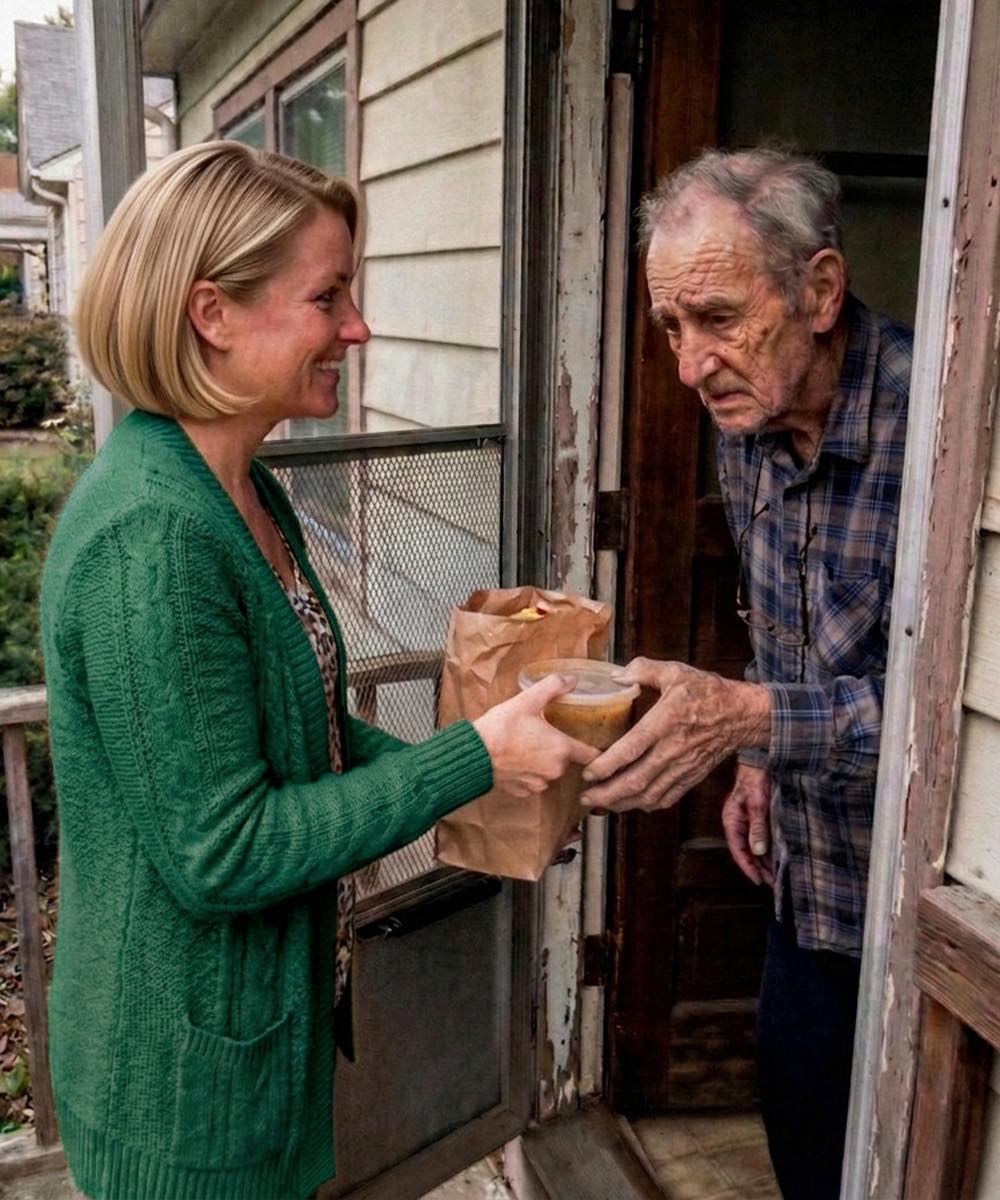
The first time I brought it to Arthur’s house, he barely opened the door.
“I didn’t ask for charity,” he grumbled.
“Good, because I didn’t ask if you wanted it.”
He took the plate anyway, and the next morning, it was empty.
That became our routine, but Arthur didn’t get nicer—not really.
About five years in, something shifted.
I knocked like always, but that day, Arthur didn’t shut the door.
“Are you coming in or not?” he called from inside.
I stepped in slowly.
The house was clean.
And the walls stopped me cold—they were covered in photos.
Kids at birthdays. School portraits. Holidays. Smiles frozen in time.
“Your family?” I asked.
Arthur stood by the window, staring out.
“I have three kids,” he muttered. “They stopped coming.”
That was all he gave me, but it was enough.
After that, I understood Arthur a little more.
And I didn’t stop bringing the food.
If anything, I showed up even more.
Seven years passed like that.
Neighbors called me crazy.
Maybe I was.
Then, last Tuesday came.
Arthur’s porch light wasn’t on like usual.
I noticed right away. When he didn’t answer my knock, I tried the handle. It was unlocked.
I stepped inside carefully.
“Arthur?”
Nothing.
I walked down the hallway and pushed open a door.
I found him lying in bed peacefully, as if he had simply fallen asleep. He was 80.
Arthur’s funeral was small. I received an invitation by mail through his lawyer.
And that’s when I finally saw his children.
Daniel, the oldest. Claire, the middle child. And Mark, the youngest.
They all wore expensive suits and stood together.
I overheard them whispering about their inheritance.
None of them looked at me or asked who I was.
After the service, a man approached me.
“Are you Kylie?”
“Yes.”
“I’m Thomas, Arthur’s lawyer. He requested your presence at the will reading this afternoon at my office at 3 p.m.”
I frowned. “Are you sure?”
Thomas gave a small nod. “Very.”