I Took Care of My Elderly Neighbor – After She Died, the Police Knocked on My Door, and When I Learned Why, My Knees Buckled

She looked embarrassed more than frail.
"Would you like me to help you sort through it?"
She hesitated. Then she stepped aside.
"That would be kind of you, dear."
That evening changed both our lives.
Her name was Mrs. Whitmore. She was 82 and lived alone with her ginger cat, Pumpkin.
Sorting mail together became the beginning of everything.
That evening changed both our lives.
I started stopping by after work. Picking up her medication. Bringing her groceries. Fixing small things around the house.
I learned that she liked her tea steeped for exactly four minutes. That she never missed her favorite television show.
We'd sit on her porch in the evenings. Drink tea from chipped cups. Talk about everything and nothing.
Mrs. Whitmore told me stories about her late husband and the three children they raised, and about a life she said had been good to her. I didn't talk much about my own past.
Mrs. Whitmore told me stories about her late husband.
She was standing in my kitchen one afternoon, helping me fix a pie recipe, when her eyes drifted to the child's drawing still hanging on my refrigerator. The one I couldn't bring myself to take down.
It was the last thing my daughter made before illness took her from me, and not long after, my husband and I lost each other, too.
Mrs. Whitmore never questioned me.
We filled each other's silence.
It was the last thing my daughter made before illness took her from me.
***
For the first time in years, I didn't feel so alone.
Mrs. Whitmore told me she had three children: two daughters and a son. They lived in another state and rarely visited. When they did come, their visits were loud and impatient.
They walked through the house as if they were measuring it. Discussing who would get what "when the time came."
One daughter lingered in Mrs. Whitmore's bedroom once, staring at a jewelry box with calculating eyes.
They walked through the house as if they were measuring it.
They argued loudly about money, the house, and possessions that were not yet theirs.
I stayed in the other room, quietly sorting wool for Mrs. Whitmore, pretending not to hear.
When they left, the house always felt drained. Mrs.
Whitmore would sit quietly for hours afterward.
I never said anything. I wasn't family. But I saw everything.
And it made me angry.
They argued loudly about money.
Last month, Mrs. Whitmore's health began to decline.
On a quiet morning last week, I went over as usual with her groceries and found the house too still. Pumpkin was pacing near the hallway. Mrs. Whitmore was in her bed, peaceful, as if she had simply drifted off.
The children were informed afterward.
Planning her goodbye became one last way to show up for her. I knew what she would have wanted. The hymns she loved. The simple flowers. The cookies from the bakery she visited every Sunday.
Planning her goodbye became one last way to show up for her.
Her children showed up dressed in solemn black, wearing practiced grief.
By evening, they were already discussing paperwork.
I went home, hollow and furious.
***
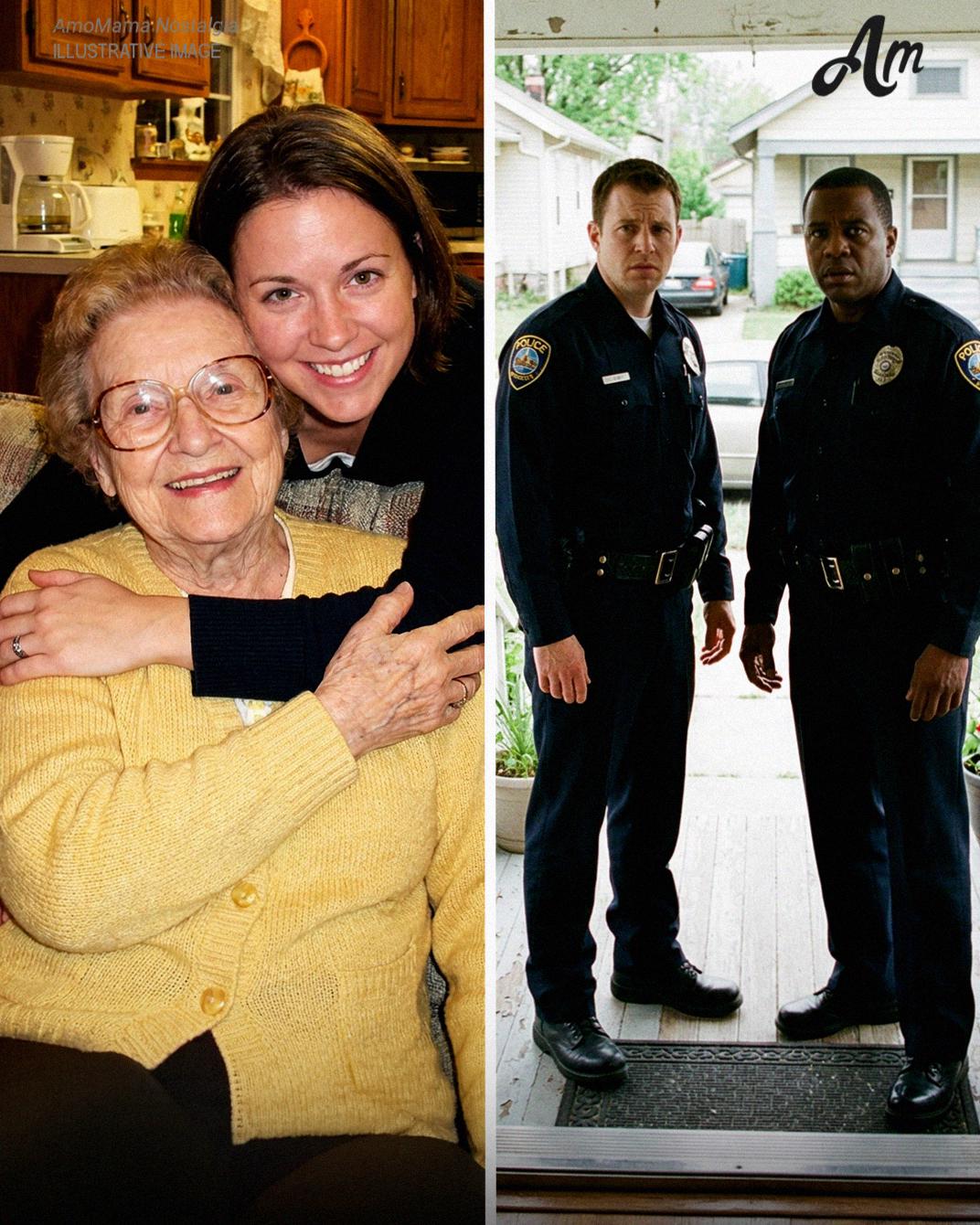
This morning, after the funeral, I was still in yesterday's clothes when someone pounded on my door. I opened it. Two police officers stood outside. One of Mrs. Whitmore's daughters stood beside them, face hard with anger.
My heart started pounding.
Two police officers stood outside.
"Were you the one taking care of Mrs. Whitmore?" one officer asked.
"Yes."
Before he could say anything else, the daughter shouted.
"It's all her! She's responsible for everything!"
A chill crept up my spine.
"Ma'am, we need you to come with us," the officer said.
"What are you talking about? What happened?"