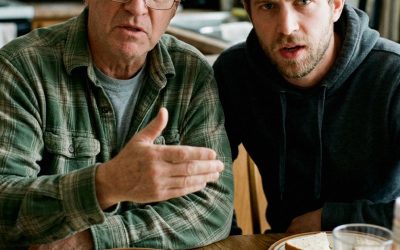
Then Dad exploded.
“You’re ungrateful. You’d be nothing without this family name.”
“Funny,” I said, pulling the folded document from my coat. “That’s exactly what I came to talk about.”
I placed the charter of the Remembrance Foundation on the table.
“As of yesterday, the trust is under federal and royal protection. Every dollar that was misused is being returned to its rightful purpose. You’ll receive a formal audit notice within a week.”
His face drained of color.
“You wouldn’t.”
“I already did.”
Mom’s voice trembled.
“Evelyn, this is going to ruin us.”
“No,” I said gently. “It’s going to save us. Just not in the way you think.”
Dad turned away, gripping the edge of the table until his knuckles went white.
“You’ve disgraced your grandfather’s memory.”
I stepped closer.
“No, Dad. I honored it. You’re just upset that for once, you’re not the one wearing the uniform.”
The words hung in the air like thunder after lightning.
When I left, the house behind me felt smaller somehow. The mansion, the paintings, the trophies—they all looked like stage props now.
That night, I sat in my car on the hill overlooking the estate. The porch lights flickered, tiny and fragile, while my phone buzzed again.
This time it was Sir Edmund.
“Lieutenant Carter,” he said warmly. “I trust you’ve seen the news coverage.”
“I have.”
“Her Majesty was pleased. She asked me to convey her personal congratulations and to inform you that your speech at the foundation’s inauguration has been scheduled for next week.”
“My what?”
“There will be representatives from both governments, several generals, and a few veterans’ families. It’s a significant occasion.”
I laughed nervously.
“I’m not a politician, Sir Edmund.”
“No,” he said, “and that’s precisely why you’re the right person. Your grandfather wanted someone who could speak from the heart, not the podium.”
The next week passed in a blur of preparations.
I rehearsed in front of the mirror, then stopped.
Grandpa would have hated that.
He always said, “Speak plain, Eevee. Truth doesn’t need polish.”
The day of the ceremony, the auditorium in D.C. was packed—rows of uniforms, ribbons, and medals shining under the lights. A portrait of General Henry A. Carter stood beside the stage, draped with both flags.
When they called my name, I walked to the podium, the sound of my heels echoing like drumbeats.
“Good morning,” I began, voice steady. “When I was a little girl, my grandfather told me that a soldier never truly retires. She just changes her battlefield. I didn’t understand what he meant until now.”
I spoke about honor. About service. About what it meant to carry a legacy that wasn’t built on wealth, but on faith in humanity.
I talked about the veterans who came home and were forgotten, and how this foundation would make sure they never were again.
When I finished, the room was silent.
Then came the applause—soft at first, then thunderous.
Somewhere in that sea of uniforms, I saw an older Marine wipe his eyes.
Afterward, as I stood backstage, Sir Edmund approached.
“Your grandfather would have been proud.”
“I hope so.”
He smiled.
“He would have said, ‘Mission accomplished, Lieutenant.’”
That night, as I drove home, my phone lit up with a new message from an unknown number.
It was Dad.
Your speech was something. I didn’t understand before. I do now. I’m sorry.
I stared at the words until they blurred.
For the first time, the silence between us felt less like a wall and more like a bridge waiting to be crossed.
I didn’t reply.
Not yet.
Some truths didn’t need words.
They just needed time.
Outside, the night sky stretched wide and full of stars, the same kind Grandpa used to chart missions by.
I rolled down the window, breathed in the cold air, and whispered, “Roger that, sir.”
Six months later, spring rolled over Virginia like a quiet redemption.
The vineyard behind the Carter estate bloomed again, but this time without the hollow pride that once choked it.
The headlines had faded. The audits were done. And the Remembrance Foundation was thriving—homes built, scholarships granted, forgotten soldiers honored.
But I hadn’t been back since the night of our confrontation.
Not until today.
The car engine purred softly as I parked beneath the old oak tree Grandpa planted the year I was born. The wind smelled faintly of lilac and rain.
I stepped out in my Navy dress uniform, the medal gleaming faintly in the overcast light.
It wasn’t about show.
It was about respect.
The front door opened before I could knock.
Mom stood there, smaller somehow, her voice uncertain.
“You look beautiful, Evelyn.”
“Thank you, Mom.”
She hesitated.
“Your father’s in the garden.”
I nodded and walked past her down the familiar stone path that led to Grandpa’s memorial. He’d been buried under the flag he once saluted, beneath a marble plaque that read:
GEN. HENRY A. CARTER
SERVED BOTH DUTY AND HUMANITY
Dad was kneeling by the grave, trimming the grass around it with quiet precision. His once impeccable hair was now streaked with silver.
When he looked up, there was no arrogance.
Only weariness.
“I didn’t think you’d come,” he said softly.
“I wasn’t sure I would,” I admitted.
He set down the shears and exhaled slowly.
“I needed time to face what I’d done. To him, to you, to what our name stood for.”
I watched him straighten the small U.S. and U.K. flags on either side of the stone.
“He’d like this,” I said. “Two nations side by side.”
He smiled faintly.
“He always believed strength came from alliances. I never understood that until I watched your speech.”
We stood in silence for a while.
Birds sang somewhere in the distance.
The world alive again.
Finally, he turned toward me.
“You know, I was angry at first. Thought you’d betrayed us. But then I realized you were the only one who remembered who we were supposed to be.”
I swallowed the knot in my throat.
“I didn’t want to destroy anything, Dad. I just couldn’t let his work die in greed.”
He nodded slowly.
“You didn’t destroy it. You redeemed it.”
The air between us softened—fragile, but honest.
He reached into his pocket and pulled out a small weathered box.
“Your grandfather gave this to me after my first promotion. I never opened it. I wasn’t ready.”
He handed it to me.
Inside was a single silver chess piece.
The queen.
“One day, give this to the person who understands the game better than you ever did,” Dad recited quietly. “He must have known it would be you.”
I laughed, half choking on tears.
“He always did love his symbolism.”
We stood there for a long while, not as adversaries, but as two soldiers on the same side for once.
When Mom joined us, she was holding a bouquet of white roses.
“I’m sorry,” she said before I could speak. “For what I said at the will reading. For what I thought of you.”
I took her hand gently.
“It’s okay, Mom. We all saw what we wanted to see back then.”
“No,” she said, shaking her head. “You saw what mattered.”
She placed the flowers beside the grave, and together we bowed our heads.
Later, as we walked back toward the house, Dad stopped by the porch steps.
“We want to help,” he said. “The foundation. However we can. Not for credit. Just to do something right for once.”
I smiled, feeling the old ache loosen.
“Then start with the Veterans Housing Project in Norfolk. They could use a good construction team.”
His eyebrows rose.
“You’d trust me with that?”
“I’m not giving you the project,” I said with a grin. “I’m offering you a chance to serve.”
He nodded, understanding perfectly.
That evening, I drove to the coast where Grandpa used to take me fishing.
The water shimmered gold under the sunset—quiet and vast.
I stood there alone, watching the waves roll in. Rhythmic. Patient. Eternal.
From my pocket, I pulled the chess piece and turned it in my fingers.
“You were right, Grandpa,” I whispered. “Some battles aren’t fought in war rooms. They’re fought in living rooms, across dinner tables, inside the hearts of people who forgot what honor means.”
The wind carried the words away like a salute.
When I returned to the city that night, the foundation’s new headquarters glowed softly in the dark. A modest building, but alive with purpose.
On the wall inside hung two flags side by side, and a single quote engraved in brass:
Service isn’t what we do for medals. It’s what we do when no one is watching.
—General Henry A. Carter
I looked around at the young volunteers sorting supplies and answering calls from veterans.
This was what legacy looked like.
Not wealth. Not prestige.
But continuity.
Before leaving, I wrote a short note and placed it on my desk for the next morning’s staff briefing.
Let’s remember that every decision we make here honors someone who once wore a uniform. Make Grandpa proud. Make America proud.
—Lt. Evelyn Carter
Outside, the first stars blinked awake.
I took a deep breath and smiled.
“Mission accomplished,” I whispered. “But the work goes on.”
Then, turning toward the camera of a world that would never truly see the whole story, I spoke the same way Grandpa used to when signing off a field report—firm, clear, and full of quiet pride.
If this story touched your heart, take a moment to reflect on your own legacy. Remember the people who served before you. Forgive those who failed you. And honor the ones who believed in you when no one else did.
Because family isn’t about blood or inheritance.
It’s about who still stands beside you when the uniforms are gone.